Foot pain almost never arrives with a label attached. You know it hurts under the heel, or across the ball of the foot, or on top near the laces, and past that it is guesswork. The useful news is that two pieces of information you already have, where it hurts and when it hurts, cut the list of likely causes down fast. Here is how we use them.
Where it hurts narrows the field
Point to the exact spot with one finger. That single gesture rules out more than most people expect.
- Underneath the heel bone. Usually the thick band of tissue running along the arch (the plantar fascia) protesting where it anchors. Our heel pain page walks through how we treat it.
- The back of the heel, along the cord. Irritation of the Achilles tendon, typically worse on stairs, hills, and the first hard effort of a workout.
- The ball of the foot, with burning that shoots toward the third and fourth toes. Often a pinched nerve between the long bones, which many people describe as a bunched up sock they cannot smooth out.
- The top of the foot, aching after a jump in mileage. This is the pattern of a bone under stress or a tendon working past its limit, and it is the one people most often try to push through.
- The joint at the base of the big toe. Stiffness and grinding point toward arthritis in that joint. A widening bump with the toe drifting sideways points toward a bunion.
- Along the inside of the ankle and into the arch. The tendon that holds the arch up may be fatiguing, which is worth catching early.
When it hurts fills in the rest
Timing is the second half of the story. Pain that is sharpest on your first few steps out of bed and eases as you move usually involves soft tissue that tightens up overnight and gets stretched again in the morning. Pain that starts fine and builds through a long day on your feet is more often a matter of load and support. Pain that wakes you at night with burning, tingling, or a crawling sensation is more likely coming from the nerves, and if you have diabetes that symptom belongs in front of both us and your primary care doctor. Pain that arrived all at once, with a pop or a snap and bruising within a day, is an injury and needs a different clock entirely.
What is fair to try on your own
For a new ache with no injury behind it and no open skin, a couple of weeks of sensible home care is reasonable:
- Back off the activity that reproduces the pain rather than stopping everything. Swimming and cycling usually stay available.
- Wear a supportive shoe indoors. Barefoot on hardwood and tile is hard on an already irritated foot.
- Ice the sore spot for ten to fifteen minutes after you have been on your feet.
- Stretch your calves and the bottom of the foot daily. Tight calves drive a surprising amount of foot pain.
- Check the shoes you wear most. If the heel is worn through on one side or you can fold them in half, they are part of the problem.
Give that about two weeks. If the pain is unchanged, or you find yourself planning your day around it, home care has told you what it can.
Pain that should not wait two weeks
- You cannot put weight on the foot after a fall, twist, or dropped object
- Redness and warmth that are spreading, especially with a fever
- Any open sore, blister, or new foot problem at all if you have diabetes, neuropathy, or poor circulation
- A sudden pop at the back of the ankle followed by weakness pushing off
- Swelling in one foot that has not settled after several days of rest and elevation
- Numbness that is new, or night pain that keeps waking you
What the visit itself looks like
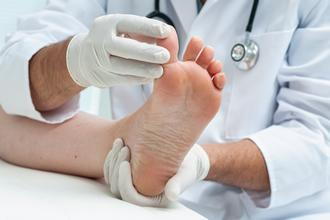
Bring the shoes you actually wear, work and workout pairs included. We will ask what changed in the weeks before the pain started, since new shoes, a new job, a mileage goal, or a weight change often sits right at the beginning of the story. Then we press on specific structures to see what reproduces your symptoms, and watch you walk. At our Fredericksburg office we have digital X-ray and diagnostic ultrasound on site, so a bone or tendon question usually gets answered the same day.
Most foot pain does not end in an operating room. Taping, padding, a specific stretching program, a change in footwear, physical therapy, custom orthotics made from a 3D scan of your foot, and targeted injections resolve the large majority of what walks through the door. When surgery is genuinely the right answer, our surgeons perform those cases at Stafford Hospital, and you will know well in advance why it is being recommended.
Get an answer instead of a guess
Rappahannock Foot & Ankle Specialists has cared for feet in this area since 1986, with six podiatric surgeons across our Fredericksburg office at 195 Falcon Drive, (540) 371-3338, and our North Stafford office at 450 Garrisonville Road, (540) 659-5067. If your foot has been hurting long enough that you have started working around it, contact us and let us find out why.