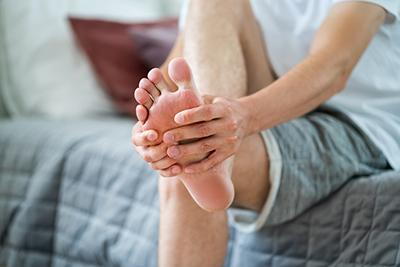
By the end of the day your socks are damp and slipping your shoes off in front of anyone else is out of the question. Sweaty feet and the odor that travels with them are common, they are almost never dangerous, and in most cases they respond to a handful of changes you can start this week. Here is what is actually happening inside your shoes, and what to do about it.
Why Feet Sweat the Way They Do
The skin on the soles of your feet carries a heavier concentration of sweat glands than most other areas of the body, and those glands react to heat, activity, and stress alike. Sweat itself has no smell. The odor arrives when the bacteria that live normally on your skin feed on that moisture and release sulfur compounds as a byproduct. Give them a warm, enclosed, damp space for ten or twelve hours and they multiply happily. The clinical name for the result is bromodosis.
Several things tip the balance in the wrong direction:
- Closed shoes worn all day, particularly ones with synthetic linings that hold moisture in
- Long shifts on your feet, or work boots that never fully dry out between wearings
- Hormonal shifts during adolescence, pregnancy, or menopause
- Stress and anxiety, which switch on a different set of sweat glands than heat does
- Thyroid conditions, diabetes, and some prescriptions, including certain antidepressants
When the sweating is heavy, arrives without an obvious trigger, and soaks through socks day after day, it may be plantar hyperhidrosis, the term for excessive sweating confined to the feet. That version is worth having looked at, because it rarely settles on its own.
A Daily Routine That Keeps It in Check
Most people get a long way on habits alone. The goal is straightforward: less moisture sitting against your skin, and less time for bacteria to work on it.
- Wash your feet with soap once a day, then dry them completely, including the spaces between the toes where dampness lingers longest.
- Rotate your shoes so every pair gets a full day to dry before you wear it again, and pull the insoles out overnight so air can reach them.
- Reconsider your socks. Wool and technical synthetics move sweat off the skin surface, while cotton absorbs it and keeps it there. A spare pair in your bag for a midday change helps more than most people expect.
- Put antiperspirant on clean, dry soles at bedtime rather than in the morning. The aluminum salts need several quiet hours on still skin to plug the ducts.
- Shake a foot powder into your shoes after you take them off, not only before you put them on.
- Spend part of the evening in open sandals so the skin dries out fully before the next day starts.
When the Smell Is Pointing at Something Else
Odor that will not budge, or that shows up alongside changes in your skin or nails, deserves a closer look.
- Itching, scaling, or peeling between the toes usually means athlete’s foot, a fungal infection that thrives in exactly the same damp conditions.
- Shallow little pits scattered across the weight bearing part of the sole, paired with an unusually strong smell, suggest a bacterial skin condition called pitted keratolysis. It clears with the right topical treatment and ignores scrubbing entirely.
- Thick, crumbly, discolored nails mean the trouble has reached the nail itself, which is a separate problem with its own treatment path. Our fungal toenail page walks through the options.
- Redness, warmth, swelling, or drainage in one foot only is not an odor problem. Call us instead of waiting it out.
If you have diabetes or reduced feeling in your feet, treat any change in the skin as a reason to be seen rather than something to handle at home.
What We Can Offer Beyond the Drugstore Shelf
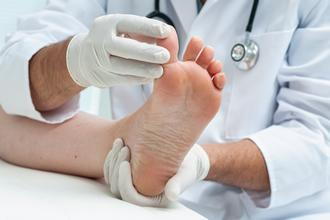
The first job is sorting out what is driving the odor, because fungus and bacteria look similar from the outside and answer to different medications. Guessing at the pharmacy counter is how people end up treating the same problem for a year. Depending on what we find, options include a prescription strength antiperspirant, a topical or oral antifungal, or a topical antibiotic for the pitted skin pattern.
For heavy sweating that has not responded to anything else, there are two further steps. Iontophoresis passes a mild electrical current through a shallow tray of water while your feet rest in it, quieting the sweat glands over a series of sessions. Injections that block the nerve signal to those glands can hold sweating down for months. We will also check whether a medication you take or another condition is contributing, since treating the source is often simpler than treating the feet.
Bring It Up, Even If It Feels Awkward
Sweat and odor are among the more embarrassing things patients mention to us, and among the more straightforward things we manage. If your feet are soaking through socks, if the smell is affecting where you feel comfortable taking your shoes off, or if the skin between your toes has started to change, the podiatrists at Rappahannock Foot & Ankle Specialists can find the cause and give you a plan that holds. Reach our Fredericksburg office at (540) 371-3338, our North Stafford office at (540) 659-5067, or contact us to set up a visit.