
SAME-DAY URGENT APPOINTMENTS USUALLY AVAILABLE
Ingrown Toenail Treatment in Fredericksburg, VA
Fast relief today, and a lasting correction so the same toe is unlikely to trouble you again.
☎ Fredericksburg: (540) 371-3338
☎ North Stafford: (540) 659-5067
Same-day urgent appointments • Lasting correction in one office visit • Since 1986 • 900+ five-star reviews
What Is an Ingrown Toenail?
An ingrown toenail is exactly what it sounds like: the edge of the nail, almost always on the big toe, curves or grows into the soft skin beside it. The skin responds the way skin responds to any foreign object pressing into it: inflammation, swelling, and pain that throbs against every shoe. Once the nail edge breaks the skin, bacteria get in, which is where the redness, warmth, and drainage come from. The usual culprits are trimming nails too short or rounding the corners, shoes that crowd the toes, an inherited curved nail shape, and stubbed toes or sports trauma, with teenage athletes in tight cleats being especially prone to it.
With a recurring ingrown, the cause is usually not your technique, your shoes, or bad luck. It is the shape and behavior of that nail border, which is set by the nail root. That is why the same toe can do this over and over no matter how carefully you trim, and it is why the lasting correction targets the root rather than the nail edge.
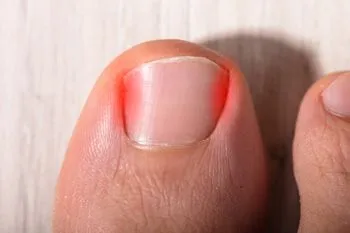
The nail border presses into the skin fold; once it breaks the skin, infection typically follows.
How Bad Is Yours?
Stage 1: Irritated
Redness, mild swelling, tender when pressed or in snug shoes. The skin is not broken. Conservative care has a real chance here.
Stage 2: Infected
Increasing pain, spreading redness, warmth, and drainage or pus at the nail edge. The nail border needs to come out; soaking alone will not fix an embedded nail.
Stage 3: Chronic
The same toe, over and over, often with overgrown, heaped-up tissue along the nail fold. For a toe at this stage, the lasting correction is usually the right answer.
You’ve Probably Already Tried…
Warm soaks with Epsom salt. Cotton wedged under the nail corner. Antibiotic ointment and a band-aid. Cutting a V-notch in the nail, which is a common myth, since the V does nothing to the buried edge. And trying to reach it yourself with clippers, at an angle that is nearly impossible to manage on a toe that hurts too much to grip.
Soaks and ointment genuinely help a Stage 1 irritation, and if the skin is not broken, a few days of that plus roomier shoes may settle it. Once the nail edge has embedded or the toe is infected, though, home care mostly postpones the two-minute fix while the infection continues. Trimming it out at home carries one specific risk worth knowing about: partial removal usually leaves a spicule of nail behind, which grows forward and creates a worse ingrown than you started with. That is a common reason a sore toe ends up needing a procedure.
When to See a Specialist
Come in when the pain is worsening rather than settling after a couple of days of home care; when there is any drainage, pus, or spreading redness; when this is the second or third round on the same toe; or when the toe hurts enough to change your shoes or your gait. And if you have diabetes, neuropathy, or poor circulation, skip home care entirely and come in at the first sign: what is a nuisance for other patients is a genuine medical risk for you, and we treat it with that seriousness.
Relief usually comes right away, and we hold same-day slots for exactly this.
Throbbing toe? Call now and tell us it’s an ingrown.
Request an appointment online, or call the office closest to you.
☎ Fredericksburg: (540) 371-3338
☎ North Stafford: (540) 659-5067
Treatment Options
Relief Today
Conservative care for early cases. For a Stage 1 toe with unbroken skin, we can often lift and guide the nail edge, treat the inflammation, and coach your trimming and footwear so it settles without any procedure.
Partial nail removal. For the embedded or infected toe: we numb the toe completely with a small local anesthetic injection, gently remove only the offending nail border, and drain any infection. The procedure takes minutes, relief is usually immediate, and the rest of your nail stays untouched. Most patients walk out in their own shoes.
The Lasting Correction
Matrixectomy: retiring the problem border. For the toe that keeps doing this, we remove the ingrowing border and then treat the small section of nail root that produces it, so that in the great majority of cases that edge does not grow back. The nail afterward looks nearly identical, just a sliver narrower on that side, and the recurrence rate is very low. It is done in the same office visit, under the same local anesthetic, adding only minutes to the procedure.
For people with chronic ingrown toenails, it is a short, well-tolerated procedure that settles a long-running problem in a single visit.
What to Expect After Treatment
1. Walking out
You leave the office on your own two feet, usually in your own shoes, with a bandaged toe and the throbbing usually already gone.
2. The first days
Simple daily soaks and a fresh bandage. Discomfort is minimal, typically handled with nothing or over-the-counter medication. Most patients are back at work or school the next day.
3. The first weeks
The nail fold heals over about two to four weeks with basic care. Sports typically resume within days for simple removals, slightly longer after a matrixectomy.
Kids and Teens Welcome
Growth spurts, tight cleats, and enthusiastic self-trimming make ingrown toenails especially common in teenagers, and a lot of our ingrown patients are student athletes whose parents want them back on the field this week, not this month. We treat kids and teens gently, numb thoroughly before anything else happens, and time the visit so practice schedules survive.
Why Patients Choose Rappahannock Foot & Ankle Specialists
Speed, gentleness, and a lasting result. Same-day urgent slots mean you do not have to wait out the throbbing. The procedure is done by board-certified and board-eligible podiatrists who perform it often, which is where the gentleness comes from. And when a toe keeps doing this, we can offer the lasting correction in the same visit. This practice has been doing exactly that for the Fredericksburg region since 1986.
Meet the Surgeons
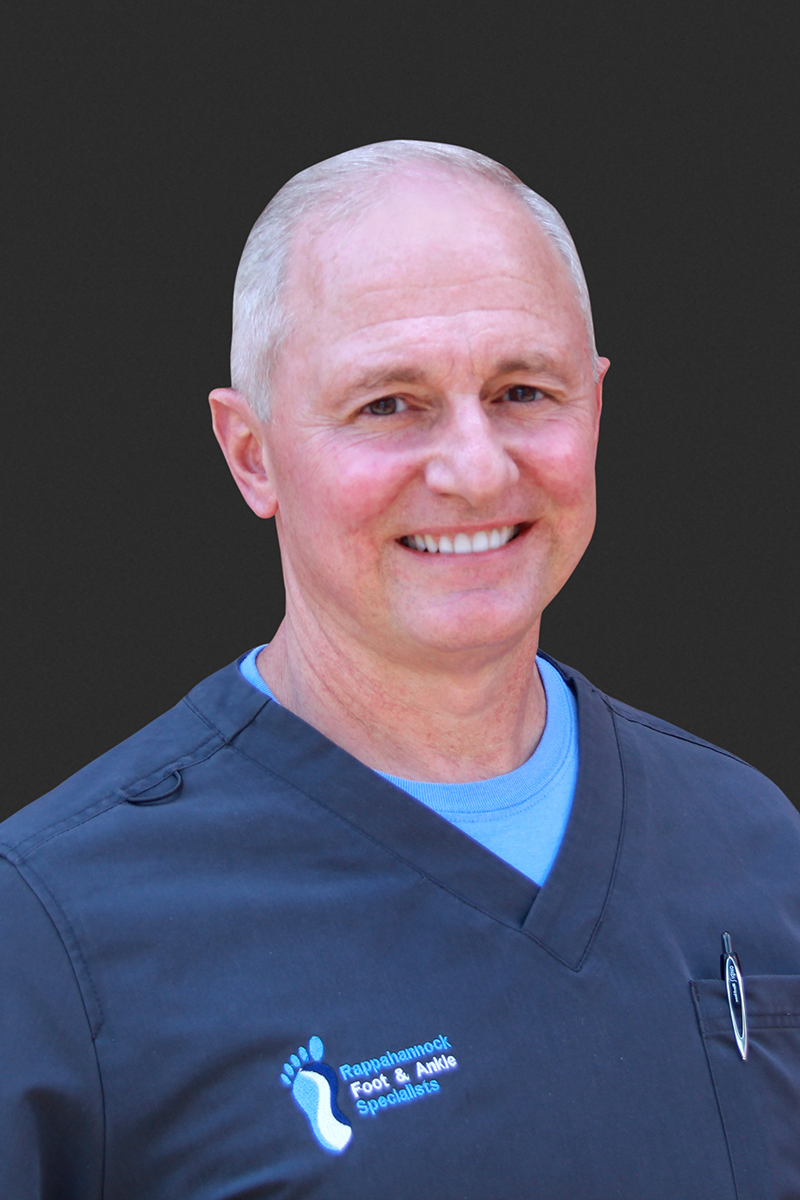
Dr. Michael Donato, DPM

Dr. Sunshine Brady-Thomas, DPM

Dr. Joel Zarzuela, DPM

Dr. Martha A. Hurley, DPM

Dr. Neelum Patel, DPM

Dr. Jessica Somma, DPM

Dr. Stephen M. Carley, DPM
Emeritus
What Our Patients Say
Frequently Asked Questions
Does the procedure hurt?
The only genuinely uncomfortable moment is the numbing injection, a quick pinch and sting at the base of the toe, and then the toe is completely numb. Most patients find the procedure itself comfortable, and the pressure that has been throbbing for weeks eases as soon as the nail edge is out.
Can I get seen today?
We hold same-day urgent appointments for exactly this situation, so call and tell us it is an ingrown toenail. An infected ingrown tends to worsen without treatment, and there is no need to spend another night with a throbbing toe.
Can I just keep trimming it myself?
You can, though it often keeps coming back, because the recurring problem lives in the nail root rather than in your trimming technique. Trimming it out at home also tends to leave a hidden spicule of nail that grows forward and creates a worse ingrown. If the same toe has done this twice, it is worth talking about the lasting correction.
What is the lasting correction, exactly?
After removing the ingrowing border, we treat the small section of nail root that produces that edge, so that in the great majority of patients it does not grow back. It adds only minutes to the same visit.
Will my nail look strange afterward?
After the correction the nail is a sliver narrower on the treated side, and most people, including the patient, stop noticing within weeks. What they do notice is being able to wear normal shoes comfortably again.
Do I need antibiotics?
Usually not. The infection exists because a foreign object, the nail edge, is embedded in the skin; remove it and drain the area, and the body clears the rest. We prescribe antibiotics for the cases that genuinely warrant them.
How fast can my kid get back to sports?
For a simple border removal, typically within days; after a matrixectomy, slightly longer. We time treatment around games when we can, and a treated toe is far more comfortable to play on than an infected one.
Is this covered by insurance?
Yes, ingrown toenail treatment, including the lasting correction, is standard covered medical care under most plans, and we verify your benefits when you book. This is one of the most accessible procedures we offer.
I have diabetes. What should I do differently?
Come in sooner, ideally at the first sign of redness, and skip home treatment entirely. With diabetes or neuropathy, an infected toe can escalate quickly and quietly, so we treat these with priority scheduling and closer follow-up.
Why does this keep happening to the same toe?
Because that nail border’s shape is set by its root, and trimming does not change the root. That is why treating the root itself is what usually stops the cycle.
Ready to Be Done With It?
Ready to Schedule?
Request an appointment or call and say “ingrown.”
Have Questions First?
Call the office closest to you and our staff can answer questions before you book.
Not Sure If It’s Ingrown?
A red, swollen nail edge is worth an exam either way, and it takes one visit.
OUR LOCATIONS