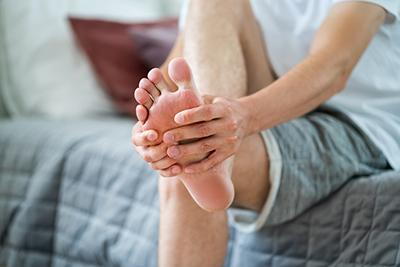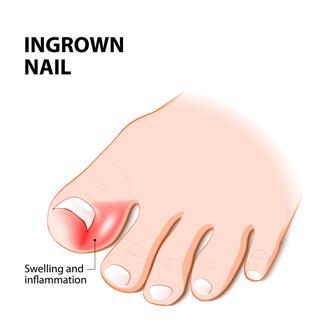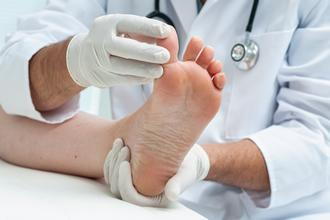
A yellow patch of hardened skin under the ball of your foot. A tender spot on the outside of a little toe that only bothers you in one pair of shoes. A heel that splits open every January. These rarely feel serious enough to schedule around, and usually they aren’t. They are still worth reading correctly, because the skin on your foot keeps a record of where your shoe, your gait, or the shape of your foot is putting more load than the tissue can absorb.
Thick Skin Is a Response, Not an Accident
A callus is a broad, flat area of hardened skin (hyperkeratosis) that builds where the same spot takes repeated pressure. A corn is that same process concentrated into a smaller, deeper cone, and it almost always sits on or between the toes.
Neither appears at random, so the useful question is what is pressing there. Common answers include:
- a toe box that squeezes the forefoot into a narrower shape than it actually is
- a seam or stitched overlay sitting directly on top of a bony prominence
- one toe that rides higher or bends more than its neighbors
- pressure shifting forward onto the ball of the foot as the arch flattens over the years
Filing skin down without changing the pressure simply resets the clock. When the same spot rebuilds month after month, the load pattern under your foot is worth measuring rather than guessing at. Our Fredericksburg office scans feet in three dimensions for custom orthotics, which are built to move weight off the exact area that keeps complaining.
Safe Maintenance at Home
If your circulation and sensation are normal, gentle upkeep is reasonable. Soak for about ten minutes in plain warm water, then use a foot file or pumice with light pressure and only a few passes. Stop while thickened skin is still there. The goal is to thin it, not to strip it, and going too far leaves raw tissue that is easier to infect than the callus was. Follow with a moisturizer.
Two things to skip. Medicated corn plasters, the round pads with a hole in the middle, carry salicylic acid that does not distinguish thick skin from the healthy skin around it, and we see chemical burns from them often enough to steer patients away. And never take a blade to a corn or callus yourself.
Blisters: Leave the Roof On
A blister forms when the top layer of skin shears loose from the layer beneath and fluid fills the gap. That loose layer is the cleanest dressing you will find, so an intact blister should stay intact. Pad around it, switch to a shoe that does not press on it, and give it a few days.
If it is big enough that walking hurts, drain it on purpose rather than letting it tear. Wipe the skin with alcohol, sterilize a fine needle, make one small opening at the low edge, ease the fluid out, and leave the top layer lying flat. Cover it with antibiotic ointment and a clean bandage, changed daily so you get a look at what is happening underneath.
Preventing the next one comes down to friction and moisture. Wool blend or synthetic socks pull sweat away from skin, while cotton holds onto it. Retire running shoes before the midsole packs flat, and put a thin film of lubricating balm on the spots that always rub.
Heels That Dry Out and Split
Cracks in the heel (fissures) usually start as a stiff rim of thickened skin around the back edge. The heel pad spreads under your body weight, the rim has no give left in it, and it splits. Backless shoes and sandals make this worse because nothing holds the fat pad in place from behind. What tends to help:
- warm rather than hot water, and shorter showers through the winter
- a thick cream instead of a thin lotion, applied while skin is still damp
- looking for urea, lactic acid, or ammonium lactate on the label, since those soften keratin instead of just coating it
- moisturizing at bedtime and covering with cotton socks overnight, while keeping cream away from the skin between the toes
When Skin Trouble Stops Being Minor
Have us look if you notice redness spreading from the edges, warmth, throbbing, or drainage. A dark speck inside a corn or callus deserves attention too, because that is often dried blood from tissue breaking down underneath. So does a rough spot you assumed was a callus that has not budged, since plantar warts imitate calluses convincingly.
If you have diabetes, peripheral neuropathy, or reduced circulation, the rule is shorter. Do not soak, file, cut, or medicate anything yourself, and call us about any blister, crack, or sore no matter how small. Reduced sensation means the warning system that normally tells you a treatment has gone too far is not reporting in.
Foot Skin Care in Fredericksburg and North Stafford
Rappahannock Foot & Ankle Specialists has cared for feet in this region since 1986, and our six podiatric surgeons handle skin complaints every day. Trimming thick skin in the office takes a few minutes, is generally painless, and gives us the chance to find the pressure that built it. Call our Fredericksburg office at (540) 371-3338 or our North Stafford office at (540) 659-5067, or request an appointment and we will get you on the schedule.