A bone spur rarely announces itself. More often you notice a tender spot on top of your foot that flares when you tighten your laces, or a firm bump behind your heel that stings against a boot by mid afternoon. It has usually been forming quietly for years. The encouraging part is that most people get comfortable again without an operation, and much of that comes down to what you do on ordinary days.
What a Bone Spur Really Is
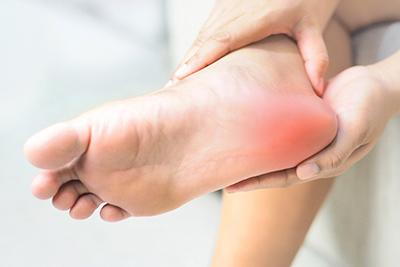
A bone spur (an osteophyte) is extra bone your body lays down where a joint or a tendon attachment takes repeated stress. It is not a growth and it is not something foreign. It is your own bone reinforcing an area that has been working hard. In the foot they turn up in a few predictable places: across the top of the midfoot, at the big toe joint, at the back of the heel where the Achilles tendon anchors, and under the heel where the arch band attaches.
Here is the part that surprises people. The spur itself is often not the thing causing pain. A spur under the heel usually appears alongside irritation of the arch band (the plantar fascia), and calming that tissue is what brings relief, whether or not the bone ever changes shape. If your worst pain comes in the first few steps of the morning, our heel pain page walks through how we sort out which structure is actually involved.
Why Some Days Hurt More Than Others
Spur pain is mostly a pressure problem, and the pattern is easy to spot once you start watching for it.
- Shoes that press right on the bump, including laces pulled tight over a midfoot spur or the stiff heel counter of a dress shoe or work boot
- Long stretches barefoot on tile or hardwood at home, a common reason evenings feel worse than mornings
- A sudden jump in standing or walking, such as a weekend of yard work or a long day through an airport
- Flat, floppy shoes that let the joint under the spur move through more range with every step
- Added body weight, which raises the load on joints already under strain
Everyday Ways to Take the Pressure Off
Most of what helps is small, cheap and repeatable.
- Re-lace around the sore spot. Skip the eyelets sitting over a midfoot bump and lace above and below it instead. That one change settles a surprising amount of top-of-foot soreness.
- Pad around the spur rather than on top of it. A felt or gel pad with a hole cut in the center shifts pressure onto the tissue nearby instead of stacking it on the bump.
- Look for a deeper toe box and a softer heel collar when the spur sits at the back of the heel.
- Keep a supportive pair of shoes by the door and wear them indoors instead of going barefoot on hard floors.
- Ice the area for ten to fifteen minutes after a heavy day on your feet.
- Stretch your calves daily if the heel is involved, since a tight calf loads the heel with every step.
- Build activity up gradually and follow a heavy day with a lighter one.
An over-the-counter anti-inflammatory can take the edge off a flare, though check with the physician who manages the rest of your care before taking one regularly.
What Happens When You Come In
Our first job is to work out whether the pain is coming from the bone, from the soft tissue beside it, or from a nerve getting squeezed against it. That means a hands-on exam, watching you walk, and checking the wear pattern on your shoes. Digital X-ray at our Fredericksburg office shows where the spur sits and how large it has become, and diagnostic ultrasound lets us watch the nearby tendon or fascia move in real time.
From there the plan tends to be practical. Padding and shoe adjustments come first, often followed by custom orthotics built from a 3D scan of your foot to route pressure away from the sore area. Physical therapy helps when a tendon is part of the problem, and an injection can settle a flare that will not quiet down. Surgery sits well down the list, reserved for a spur that is blocking joint movement or irritating a nerve after conservative care has had a fair trial. Those cases are done at Stafford Hospital.
When to Have the Bump Looked At
- The pain has changed the way you walk, or you have started skipping activities you used to enjoy
- You notice numbness, tingling or burning near the bump, which can point to a nerve under pressure
- The skin over the spur looks red or feels warm, or a callus there is starting to break down
- You have diabetes or reduced feeling in your feet, in which case come in before the skin gets sore rather than after
- You cannot find a shoe you can wear through a normal day
Rappahannock Foot & Ankle Specialists has cared for feet in this region since 1986, with six podiatric surgeons across our Fredericksburg and North Stafford offices. If a bump on your foot has started dictating which shoes you wear and how far you walk, contact us to arrange a visit, or call Fredericksburg at (540) 371-3338 or North Stafford at (540) 659-5067.