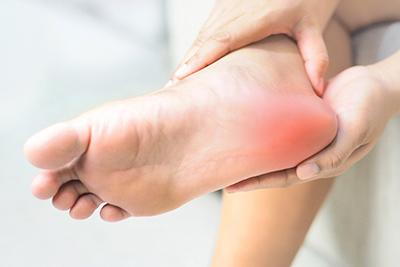
The pain sits right under your big toe joint, in the padded part of the ball of the foot. It is worse when you push off at the end of a step, worse barefoot on a tile floor, and worse the day after a long run. It built up over weeks rather than all at once, which is probably why you ignored it. That pattern points to two small bones tucked under the big toe, and to a condition called sesamoiditis.
The Two Little Bones Under Your Big Toe
Most bones connect to other bones. Two in your forefoot do not. They sit embedded inside the tendon that runs beneath the big toe joint, roughly pea sized, side by side. Bones built this way are called sesamoids; the kneecap is the one you know about. In the foot they work as a pulley for the tendon and as a cushion for a joint that carries a surprising share of your weight at every step.
Load them harder or more often than they are used to and the bones, the tendon wrapped around them, and the lining of the joint all become irritated. That inflammation is sesamoiditis, and it turns up most in people whose activity drives weight onto the forefoot:
- Runners, especially after a jump in mileage or a switch to a thinner, more flexible shoe
- Dancers, gymnasts, and anyone who spends time up on the balls of the feet
- People with high arches, which concentrate pressure across a smaller patch of forefoot
- Anyone standing a full shift in flat shoes on hard floors
How It Feels, and What Else It Could Be
Sesamoiditis is usually a dull ache that builds through the day, tender when you press one specific spot under the big toe joint, and sharper when you bend the toe upward. Some swelling is common, and bending the toe often hurts more than walking does.
Pain that arrives suddenly is a different story. If you felt a snap during a jump or a landing and could not put weight on the foot afterward, one of those bones may be fractured, and that calls for an X-ray rather than a week of ice. Ball of foot pain has other explanations worth ruling out, including a pinched nerve between the toes, an irritated joint capsule under the second toe, a stress fracture in one of the long forefoot bones, and gout, which turns the big toe joint red, hot, and exquisitely painful over a single night.
What Helps While It Settles Down
Irritated bone and tendon calm down when you take load off them, ideally without shutting your life down.
- Step away from running, jumping, and hill work for now, and hold your fitness with cycling or swimming.
- Ice the area for about fifteen minutes a few times a day, with a thin towel between the ice and your skin.
- Wear cushioned shoes with a sole that does not fold in half, which limits how far the big toe bends.
- Stop going barefoot on hard floors at home. This one change often does more than everything else on the list.
- Try a pad placed just behind the sore spot rather than directly on it, so the pad carries pressure the bones would otherwise take.
- An anti-inflammatory such as ibuprofen can take the edge off, if your physician has told you it is safe for you.
Set your expectations in weeks, not days. These bones sit under constant pressure and have a modest blood supply, so a month or six weeks of steady management is a normal timeline. Returning to full training on the first pain free morning is how people restart the whole process.
What to Expect When You Come In
A visit starts with questions about when the pain began, then a hands-on exam. We press specific landmarks to work out which structure is sore, move the big toe through its range, and watch you walk. At our Fredericksburg office we can take digital X-rays the same day, including angled views that show the sesamoids clearly. Worth knowing: some people are born with one of these bones in two pieces, which can look like a fracture on film, so we read images against your symptoms. Diagnostic ultrasound lets us see the tendon and soft tissue around the bone.
Treatment builds from there. Padding and taping give quick relief. A stiffer insert or a custom orthotic with a recess under the tender bone keeps pressure off it for the long haul, and we scan feet in three dimensions in Fredericksburg for exactly that purpose. Stubborn cases may need a walking boot for a few weeks, and a small number benefit from an injection. Surgery on a sesamoid is uncommon and stays at the back of the line.
When to Stop Waiting It Out
Come in if the pain is limiting how far you can walk, if two weeks of sensible self care have not helped, if the joint is visibly swollen, or if the pain started suddenly. Forefoot pain caught early usually settles with padding and shoe changes, while the same problem left alone for a season becomes a longer project. The podiatrists at Rappahannock Foot & Ankle Specialists see this every week at our Fredericksburg office at (540) 371-3338 and our North Stafford office at (540) 659-5067. Contact us and we will take a look.