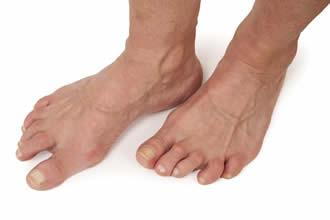
You came down wrong off the bottom step, or you caught your little toe on the bed frame in the dark. Now the foot is swollen, it hurts to stand on, and you are trying to decide whether this is a doctor problem or an ice pack problem. That question is worth answering properly, because a bone that heals in the wrong position stays in the wrong position.
A Fracture and a Break Are the Same Thing
People sometimes ask which one is worse. Neither. The two words describe the same injury, and doctors simply tend to say fracture. What varies is the bone involved, whether the pieces have shifted, and whether the break runs into a joint surface. Those three details drive the treatment.
We most often see breaks in:
- The toes, usually from a direct hit or a stub
- The long bones behind the toes (the metatarsals), from a twist, a dropped object, or running mileage
- The two small bones under the big toe joint (the sesamoids), and the heel bone after a hard landing from a height
- The ankle, where a rolled ankle can tear ligaments, break bone, or do both at once
A separate category is the stress fracture, a small crack that develops over weeks rather than in one moment. There is no injury to point at. The pain arrives during a run, then earlier in each run, then during ordinary walking. If the same small spot has ached for two or three weeks and your training or your job changed recently, that deserves an X-ray.
Signs That Point Toward Bone Rather Than Ligament
Sprains and fractures overlap more than people expect, and both swell impressively. Still, a few things tilt the odds.
- Run one fingertip along the bone. Pinpoint tenderness right on bone leans toward a fracture, while soreness spread over soft tissue leans toward a sprain.
- Swelling that appears within minutes, and bruising that spreads into the sole over the next day or two.
- Not being able to take a few steps on it, or waking the next morning distinctly worse instead of slightly better.
- Any change in shape, or a toe pointing somewhere its twin on the other foot does not.
Whether you heard a noise when it happened is not reliable evidence either way, so try not to lean on it. The honest answer is that an X-ray decides.
Why a Broken Toe Is Not Automatically a Tape Job
Strapping an injured toe to the one beside it is a real treatment, and for a clean break in a small toe with the bone still lined up, it may be all you need. The trouble is that tape does nothing to correct a bone that has shifted. It hides the problem for six weeks, by which point the problem is permanent.
Have the toe looked at, rather than taped, if any of these apply:
- It is the big toe, which carries far more of your weight and tolerates a poor result badly
- The toe sits at an angle, looks rotated, or is shorter than it was
- There is a cut or a nail bed injury over the break, which adds an infection risk
- The patient is a child, since growth plates change how these injuries are managed
- You have diabetes, neuropathy, or circulation trouble, in which case skip home care and call us
The First Two Days
While you are arranging to be seen, keep the foot above the level of your heart, since gravity does more for swelling than anything else available to you. Ice for fifteen or twenty minutes at a stretch with a cloth between the pack and your skin. Stay off it, skip heat and soaking, and wear the stiffest shoe you own rather than a soft sneaker that lets the foot bend through the sore spot.
What the Visit Looks Like
We examine the foot, ask how the injury happened, and take digital X-rays on site at our Fredericksburg office. Treatment then follows the bone. Many fractures do well in a walking boot, a rigid surgical shoe, or a cast, with crutches if you need to stay off the foot completely. We usually repeat the X-ray a couple of weeks later to confirm the alignment is holding, because that is the window where a shifting bone can still be corrected. Plan on roughly six to eight weeks for bone to knit, and a little longer before normal shoes feel normal.
Some fractures need surgical repair, usually when the pieces will not stay in line or the break involves a joint surface. Our surgeons handle those cases at Stafford Hospital, and our ankle surgery page covers that side of things.
When to Go Straight to the Emergency Room
- Bone visible through the skin, or a wound down to bone
- An obviously crooked foot or ankle
- Toes that are numb, cold, pale, or dusky
- A fall from a height or a car crash, where the leg may also be involved
Get It Imaged and Stop Guessing
If you are unsure whether the injury needs attention, call and describe it to us. Sorting it out on the phone beats a month of wondering. Rappahannock Foot & Ankle Specialists has treated foot and ankle injuries here since 1986. Reach Fredericksburg at (540) 371-2724, North Stafford at (540) 720-0674, or request an appointment online.