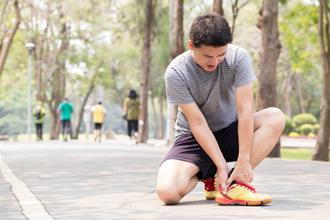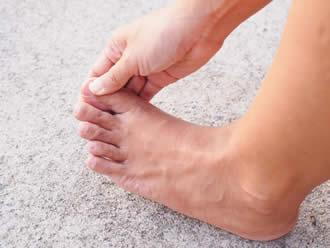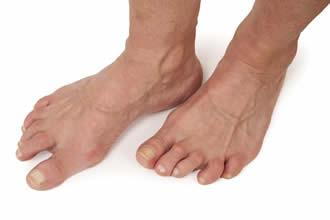
Foot and ankle injuries announce themselves in two very different ways. One is loud. You plant, something rolls, and you are sitting on the turf with teammates standing over you. The other is quiet. A spot on your heel or the front of your shin bothers you for the first mile, then one week it bothers you for all of them. Most athletes handle the loud version reasonably well and the quiet one badly, and the quiet one ends more seasons.
Sore Is Not the Same as Injured
Ordinary training soreness is spread out, tends to show up on both sides, and loosens as you warm up. An injury is usually specific enough that you can cover it with a fingertip. It gets worse as a session goes on instead of better, and it is still there the next morning. The clearest signal is pain that changes how you walk. A limp you hold for two weeks will hand you a second problem in the other leg or the low back.
What to Do in the First Two Days
After a fresh twist or a hard impact, the early goal is to keep swelling from filling the joint, because a swollen ankle is a stiff ankle for weeks afterward. Stay off it as much as your day allows. Keep the foot above the level of your hip when sitting, not just propped on a footstool. Ice for fifteen or twenty minutes at a time with a towel against your skin. Wrap the ankle snugly rather than tightly, starting at the toes and working up.
What is not helpful is testing it. Pressing on the sore spot every hour to see whether it still hurts, or jogging half a lap to find out, gives you nothing useful and usually costs you a day.
Signs You Should Be Seen This Week
- You could not put weight through the foot right after it happened, or still cannot
- You heard or felt a pop, a snap, or a tearing sensation
- Swelling that has not started to settle after two or three days
- Bruising that spreads into the arch or travels up the leg
- Tenderness you can pinpoint directly on bone, which raises the question of a stress fracture
- Numbness, pins and needles, or a foot that feels weak on push off
- An ankle that has now turned three or four times, even if each turn seemed minor
- Anything not clearly better after a week of backing off
Bring your training shoes to the appointment. The wear pattern on a pair you have actually put miles into tells us things an exam table cannot, and it often explains an injury faster than the exam does.
The Complaint We Hear Most
Runners, dancers, and anyone who competes on hard courts most often come to us describing pain under the heel that is worst on the first steps of the morning and again after a long drive. That pattern usually points to irritation where the thick band of tissue along the arch (the plantar fascia) anchors into the heel bone. It responds well to treatment started early and stubbornly to treatment started six months late, which is the whole argument against waiting for the offseason. Our heel pain page covers what treatment looks like.
Training in a Way Your Feet Can Keep Up With
Most overuse injuries we treat trace back to a change made too quickly. Prevention is largely about letting tissue catch up with ambition.
- Change one variable at a time. New shoes, a new surface, more mileage, and a speed block all in the same fortnight is how people end up in our chairs.
- Keep two pairs of shoes in rotation and retire a pair when the tread under the ball goes smooth or the heel visibly leans to one side.
- Wear the footwear built for your sport. Court shoes resist side to side loads, running shoes do not, and cleats ask something different again.
- Pack a second pair of moisture wicking socks and change out of the sweaty ones. Blisters and fungal infections both start in a damp shoe.
- Give the calf and Achilles strength work, not just stretching. Slow heel raises off a step, lowering under control, build the tissue that absorbs landing forces.
- Do not neglect hips and glutes. Weakness higher up the chain routinely shows up as pain in the foot.
Coming Back Without Doing It Twice
Returning to your sport is a sequence, not a date on a calendar. You want full, painless motion first, then normal walking, then hopping and jogging in a straight line, then cutting and changing direction, and only then live play. Skipping a step is the surest way to buy yourself a second, longer layoff. After a rolled ankle, balance work matters as much as strength work, because position sense recovers more slowly than the ligament.
Rappahannock Foot & Ankle Specialists has cared for athletes here since 1986, and our six podiatric surgeons see everyone from high school players to weekend runners at our Fredericksburg and North Stafford offices. The Fredericksburg office has digital X-ray, diagnostic ultrasound, and physical therapy under one roof, so evaluation and the start of a plan can happen in a single trip. Call (540) 371-3338 for Fredericksburg, (540) 659-5067 for North Stafford, or use our contact page to request a visit before the next game.