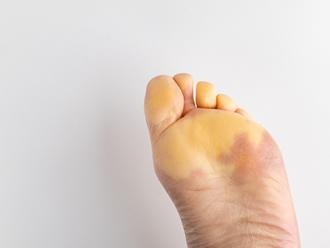
Most feet swell now and then. After a long flight, an afternoon of yard work in July, or a shift on a concrete floor, your socks leave a deeper ring than usual and your shoes feel snug by dinner. Swelling that settles overnight and returns only after that kind of day is usually your circulation working hard, not failing. Swelling that stays put, shows up in one leg and not the other, or arrives with skin changes is a different story, and so is a foot that feels cold, numb, or crampy when you walk.
Getting blood in is a different problem from getting it out
Your feet sit at the bottom of the system, so both directions are working against gravity. Arteries push oxygen rich blood down into the tissue. Veins carry it back up, helped along by one way valves and by your calf muscles squeezing with every step. Lymph vessels handle the fluid that leaks out into the tissue along the way.
When the return side struggles, fluid collects and the foot and ankle swell. When the supply side is narrowed, the tissue does not get enough blood, which shows up as pain, coldness, and skin that heals slowly. The two feel different and are managed differently, so telling them apart is the first thing we sort out.
Signs that not enough blood is reaching your feet
- A cramping, tired ache in the calf, arch, or thigh that comes on after a predictable distance and eases within a few minutes of stopping
- One foot that stays noticeably colder than the other
- Shiny, thin skin, less hair on the toes and lower leg, and toenails that thicken and grow very slowly
- A scrape or blister that takes weeks rather than days to close
- Skin that goes pale when your leg is up and turns dusky red when you hang it over the edge of the bed
- Burning or numbness in the forefoot at night that improves when you dangle your foot
Age, smoking or vaping, diabetes, high blood pressure, high cholesterol, and years of sitting still all raise the odds of narrowed arteries. Numbness and tingling can also come from nerve damage rather than blood flow, and in people with diabetes the two often travel together, which is another reason to have it checked instead of guessing.
What tends to be behind the swelling
- Long stretches of standing or sitting, especially in heat
- Leaky vein valves, which also leave heavy, aching legs and brownish staining around the ankles
- Medications, including some blood pressure pills, steroids, hormone treatments, and certain diabetes drugs
- Extra body weight, pregnancy, or a diet heavy in salt
- A recent sprain, fracture, or infection, which swells the injured area rather than both legs evenly
- Heart, kidney, liver, or thyroid conditions, which usually swell both legs together
- Damage to the lymph system after surgery or radiation, which tends to swell the foot itself, toes included
What you can do while you wait for an appointment
- Walk. Nothing pumps blood out of your legs as well as your own calf muscles, and short walks through the day beat one long one.
- If your job keeps you in a chair or on your feet, do twenty ankle pumps every hour.
- Put your feet above the level of your heart for fifteen or twenty minutes a couple of times a day. Propped on the arm of the couch counts, a footstool does not.
- Compression stockings help many people, but ask us before you buy a pair. Compression is the wrong move on a leg whose arteries are already narrowed.
- Buy shoes at the end of the day, when your feet are largest, and skip anything that grooves your skin.
- Ease off the salt, and keep drinking water. Cutting fluids does not reduce swelling.
- Moisturize dry skin, keep the spaces between your toes dry, and look your feet over daily. Swollen skin splits easily and infects readily.
- Stop nicotine in every form. It narrows small vessels and works against everything else on this list.
Call the same day for these
- Swelling in one leg with calf pain, warmth, or redness, which can signal a clot in a deep vein
- Swelling that comes on with shortness of breath or chest pain, which is a reason to call 911 rather than our office
- An open sore, spreading redness, drainage, or a fever
- Skin that has begun to weep clear fluid
- New numbness or a color change in a foot, particularly if you have diabetes
Have the circulation in your feet checked
Checking circulation is straightforward. We feel the pulses in your feet, compare one side against the other, look at the skin and nails for the changes reduced blood flow leaves behind, and use diagnostic ultrasound at our Fredericksburg office when a closer look is warranted. If the picture points beyond the foot, we coordinate with your primary care doctor or a vascular specialist. Rappahannock Foot & Ankle Specialists sees patients at 195 Falcon Drive, Fredericksburg, VA 22408 and at 450 Garrisonville Road, Suite 115, Stafford, VA 22554. Contact us to schedule a visit.