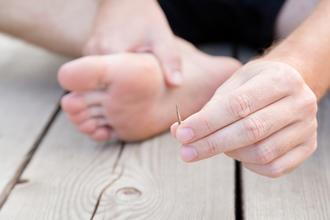
It usually happens in a garage, a garden bed, or a half finished job in the backyard. You step down, feel a sharp jab, and lift your foot to find a nail, a splinter, or a piece of glass has gone straight in. The hole left behind can look like almost nothing. That small opening is exactly the problem, because a puncture wound behaves nothing like a cut, and treating it like one is how people end up with an infection two weeks later.
Why a Puncture Is Not Just Another Cut
A cut opens the skin outward. Blood runs, air reaches the tissue, and you can see what you are dealing with. A puncture does the opposite. A narrow object drives bacteria deep into the foot and the skin closes over the top within minutes, sealing everything in. Very little bleeding comes out, which feels reassuring and is not.
Two other things make foot punctures stubborn. The object often leaves part of itself behind, and a fragment of wood, glass, or the sock fiber pushed in ahead of it will keep an infection going no matter how well you clean the surface. In the forefoot especially, the distance from the sole to the joint capsules and bone is short, so a nail that went in an inch may have reached tissue with very little blood supply.
What to Do in the First Hour
Get the weight off the foot before you do anything else.
- If the object is still stuck in the foot and does not slide out easily, leave it alone and get seen. Pulling hard can snap it and leave the tip buried.
- Rinse the area with clean running water and mild soap. Skip hydrogen peroxide and rubbing alcohol, which irritate the tissue without reaching anything deep.
- Do not dig at the opening with tweezers or a needle. You will push debris further in more often than you will pull it out.
- Cover it with a clean dry dressing and keep the foot elevated.
- Head to an emergency room or urgent care the same day if the object was dirty or rusty, if it went in deep, if bleeding will not stop, or if you have diabetes or reduced circulation.
Ask about tetanus on the spot. If more than ten years have passed since your last booster, or you cannot remember, expect to be offered one.
Follow Up With a Foot Specialist Within a Day
An emergency department will stop the bleeding, handle the tetanus question, and start antibiotics if that is warranted. What it often will not do is search the depth of the wound for retained material, which is the part that decides how the next month goes. Call our office within twenty four hours of the injury, even if the ER told you everything looked fine.
Here is what a visit generally involves. We numb the area first so the exam does not hurt, then clean the wound properly and open the track enough to see whether anything was left inside. Imaging often follows. Digital X-ray on site will show metal and most glass, and diagnostic ultrasound is better at picking up wood, thorns, and other material that X-rays miss. If the puncture landed over a joint, or the bone is tender to direct pressure, we look harder, because an infection that reaches bone is a very different problem from one that stays in soft tissue.
You will leave with dressing instructions and often a course of antibiotics. Finish the entire prescription even after the foot feels normal. Stopping partway through is a common reason a wound that seemed settled flares back up.
What to Watch for Over the Next Two Weeks
Look at the foot once a day in good light. Healing should trend steadily better, so anything that reverses course is a signal.
- Pain that increases after day two or three instead of easing
- Redness spreading out from the opening, especially in streaks
- Swelling that makes the shoe tight when it was not before
- Skin noticeably warmer over the area than the rest of the foot
- Any fluid or pus coming from the site, or an odor
- Fever, chills, or feeling generally unwell
- A sense that something is still in there when you press on the spot
Any one of those is worth a phone call the same day. That last one deserves particular respect, since people are frequently right about a retained fragment even when the first images came back clean.
Give the Foot a Chance to Close
Staying off the foot is the instruction people most often ignore, and the one that matters most. Every step reopens tissue that is trying to seal and works whatever is in the wound a little deeper. Keep weight off it as directed, keep the dressing dry, and hold off on swimming, hot tubs, lake water, and long stretches barefoot until we tell you the skin has closed. If you have diabetes or any loss of feeling in your feet, treat every puncture as urgent no matter how minor it looks, since the warning signal of pain may never arrive.
Rappahannock Foot & Ankle Specialists has been treating foot and ankle injuries in Fredericksburg and North Stafford since 1986. Deeper punctures that reach bone or joint sometimes need surgical washout, which our foot and ankle surgery team handles. If you have stepped on something and want it checked properly, reach out to our office and we will get you in quickly.