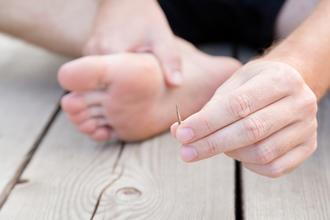
You usually notice it while pulling on a sock. One corner of a toe, almost always the big one, is tender, and the skin beside the nail has turned pink and puffy. What you feel is the edge of the nail plate pressing into the skin next to it, an ingrown toenail (onychocryptosis). It is one of the more common reasons people call us, and one of the more preventable.
Why a Nail Edge Starts Pressing Into Skin
A toenail is built to sit on top of the toe, not inside it. A handful of ordinary things nudge the edge sideways until it breaks through.
- Cutting the corners back so far that the nail has nowhere to grow except into the skin
- A nail that curls inward at the sides naturally, which tends to run in families
- Shoes with a shallow or tapered front that squeeze the toes together all day
- A stubbed toe, a dropped weight in the garage, or the jamming of long downhill runs
- Sweat and damp socks inside work boots, which soften the skin so a firm edge cuts through it
Once the skin is broken, bacteria have a route in. That is why a toe can go from mildly irritating on a Monday to red, warm, and throbbing by Wednesday.
Trim So the Corners Stay Above the Skin
How you cut your nails is the habit with the most influence here, and most people were never taught a method.
- Cut after a shower or a short soak, when the nail bends instead of shattering
- Keep the cut level and follow the shape of the end of your toe, rather than scooping down into either corner
- Leave a thin white margin. A nail taken back behind the tip lets the skin swell forward and meet the nail on its way out
- Use a straight-jawed toenail nipper. The curved jaws on a fingernail clipper encourage the rounded cut you are trying to avoid
- Smooth a rough corner with an emery board rather than tearing the snag off, which leaves a hidden spike
- Wipe your tools with alcohol, and keep your own set rather than sharing one around the house
If you get pedicures, ask that nobody cut down along the sides of the nail or push instruments underneath it. The corner removed in the chair is often the one that grows back into you six weeks later.
Give Your Toes Somewhere to Go
Shoe shape matters more than shoe size. Try shoes on at the end of the day when your feet have swollen to their largest, stand up while you check the fit, and leave roughly a thumb’s width in front of your longest toe, which is not always the big one. Socks count too, since a tight elastic cuff presses the nails together for hours. If your child plays soccer, check cleat fit every season, because cleats are cut narrow and children outgrow them fast.
What Is Worth Trying at Home, and What Is Not
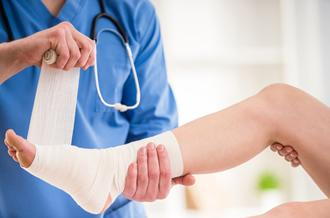
For a toe that is sore but not infected, and if you are otherwise healthy, a few days of simple care is reasonable. Soak the foot in plain warm water for ten to fifteen minutes a day, dry carefully between the toes, keep the toe under a clean bandage, and wear an open shoe.
Some efforts make it worse. Do not dig the corner out with clippers, a file, or a pocketknife, since that usually leaves a fresh spike buried deeper in the skin. Cutting a notch in the middle of the nail accomplishes nothing, despite what you may read online. And packing cotton under the corner holds moisture and bacteria against an open wound.
Some people should skip home care entirely and call at the first sign of trouble: anyone with diabetes, nerve damage in the feet (peripheral neuropathy), reduced circulation, or an immune system weakened by medication. A small nail problem can become a serious wound quickly. Everyone else should call if the toe is not clearly improving in three days, if there is pus, an odor, or spreading redness, or if the same toe keeps flaring.
What Actually Happens When You Come In
The visit is shorter and far less dramatic than most people picture. We look at the nail, ask how you trim and what you wear, and check circulation and sensation when that matters for you. Most ingrown toenails are handled in the office the same day. We numb the toe with a local anesthetic, lift out the narrow strip of nail causing the trouble, dress it, and you walk out under your own power. Expect to soak and re-dress it at home for a few days.
If the same border keeps returning, we can treat the small area of nail root that produces that strip so it stops regrowing. The nail ends up slightly narrower and the toe stops being a recurring problem. Our ingrown toenail page covers those options in detail.
Have the Toe Looked At Before It Gets Worse
An ingrown toenail is a small problem that gets expensive to ignore. Rappahannock Foot & Ankle Specialists has cared for feet here since 1986, and our six podiatric surgeons see patients at 195 Falcon Drive in Fredericksburg, (540) 371-3338, and 450 Garrisonville Road in North Stafford, (540) 659-5067. Call whichever office is closer, or request an appointment.