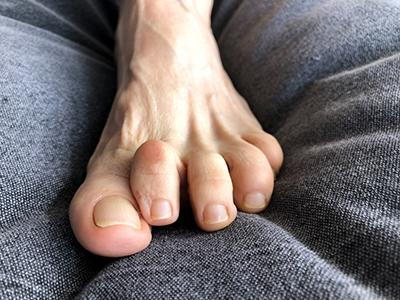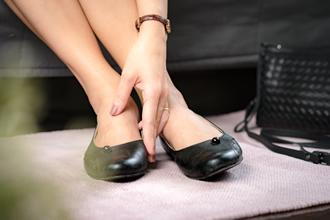
You get back to the car, slip your shoe off, and press your thumb into the ball of your foot for a few seconds. The burning eases. Twenty minutes later, walking across a parking lot, it starts up again. That pattern, forefoot pain that shoes bring on and bare feet quiet down, usually points to an irritated nerve running between the long bones of the foot. Most people know it as a Morton’s neuroma.
The name is a little misleading. Nothing is growing in there. The nerve that carries sensation to two neighboring toes passes through a narrow corridor, and when that corridor gets squeezed often enough, the sheath around the nerve thickens and the nerve stops tolerating pressure. Almost everything below is about lowering that pressure, because the pressure is the part you control between appointments.
Where the Squeeze Comes From
Two forces usually stack up. The first is side to side compression from the shoe. The second is downward load on the ball of the foot, which climbs every time your heel is lifted off the ground. Put those together and the nerve is being pinched from two directions at once for hours a day.
- Shoes that taper to a point, so the front of your foot is narrower inside the shoe than it is outside of it
- Raised heels, which tip your body weight forward onto the front of the foot and keep it there all day
- Running, court sports, and long shifts standing on a hard floor
- A bunion or a bent toe (hammertoe) that crowds the space the nerve needs
- Tight calf muscles, which stop the heel from staying down and push more of each step onto the forefoot
Start With the Shoes You Wear the Most
People often replace their running shoes and then go right back to the same work shoes for ten hours a day. Do it the other way around. Whichever pair gets the most hours on your feet is the pair worth fixing first.
- Pull the insole out and stand on it. If the front of your foot spills over the edges, the shoe is narrower than you are.
- Choose a front section shaped roughly like a foot rather than one that comes to a point.
- Twist the shoe. If it folds in half right under the ball of the foot, the sole is too soft to protect the nerve.
- Alternate between two pairs so one shape is not pressing the same spot every single day.
- Keep the dressy narrow pair for the two hours you actually need it, and carry it in rather than wearing it in.
What Else Helps on an Ordinary Day
- A small pad placed just behind the sore spot, never directly on it, spreads the bones slightly and lifts pressure off the nerve. Placement matters far more than thickness.
- Ten to fifteen minutes of ice on the top and the bottom of the forefoot after a long day settles the swelling that builds up around the nerve.
- Stretch your calves twice a day. More ankle motion means your heel stays down longer in each step, and less of your weight lands out front.
- Trade a few high impact workouts for cycling, swimming, or the elliptical while things are loud. You are not stopping exercise, only moving the load somewhere else.
- Stop walking barefoot on tile and hardwood at home. A supportive slipper or house sandal is an easy win most people overlook.
Give that two or three weeks of honest effort. If your symptoms are trending down, stay with it. If nothing has changed, or if the numbness is creeping further into the toes, that is your cue to have it looked at rather than keep experimenting.
What Happens When You Come In
The exam takes only a few minutes. We press between the heads of the long bones to find the exact space that reproduces your symptoms, then compress the foot from both sides to see whether the pain and tingling show up on cue. We check the toes for lost sensation, watch how your arch loads when you stand, and usually take an X-ray, mainly to be sure a stress fracture or joint arthritis is not the real story. Diagnostic ultrasound is available at our Fredericksburg office when it helps to see the tissue directly.
Then we talk about what to do, which can mean padding, custom orthotics, an injection, or in a small number of cases a procedure. Our neuroma treatment page goes through those choices in detail.
Do Not Wait for the Numbness to Settle In
Nerve pain that has been worked around for a year is harder to calm than nerve pain that is a few months old, and lasting numbness in the toes is a real possibility when the compression goes on long enough. If picking shoes has turned into a daily negotiation, come see us. Rappahannock Foot & Ankle Specialists has six podiatric surgeons across our two offices. Call (540) 371-3338 in Fredericksburg or (540) 659-5067 in North Stafford, or request an appointment online.