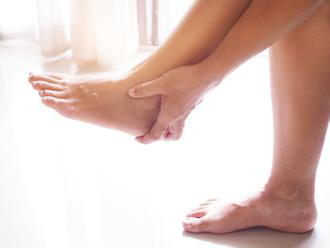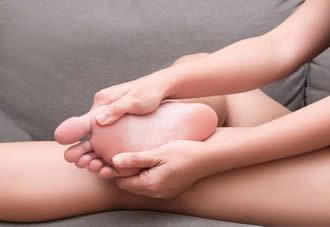
The alarm goes off, you swing your legs out of bed, and the first step onto the floor feels like landing on a stone. By the time you reach the kitchen the sharpness has softened into an ache, and by mid morning you have mostly stopped noticing it. Then you stand up after an hour at your desk and it greets you all over again. That pattern is the most familiar version of heel pain, and it is among the top reasons people call our Fredericksburg and North Stafford offices.
Why the First Step Is the Worst One
Along the bottom of your foot sits a broad sheet of connective tissue (the plantar fascia) that anchors into the heel bone and fans forward toward the ball of the foot. It behaves a little like a bowstring, tightening to hold your arch up every time you push off. Overnight your foot rests in a pointed position and that sheet settles into its shortest length. Standing up loads it in one motion, and the irritated fibers where it meets the heel bone are the part that complains. Once you have walked around for a few minutes, the tissue lengthens and the pain eases. Sitting still lets it shorten again, which is why the ache returns after a long drive or a movie.
Not every sore heel is the plantar fascia. Pain at the back of the heel rather than underneath it usually points to the Achilles tendon, and a bruised fat pad, a stress fracture, or an irritated nerve can all limp you into the kitchen too. Sorting out which one you have is what an exam is for, and our heel pain treatment page covers the options once there is a diagnosis.
A Five Minute Routine Before Your Feet Hit the Floor
The highest value change most people make is refusing to take that first cold step. Try this for two weeks before you judge it:
- Sitting on the edge of the bed, cross one ankle over the other knee, grip your toes, and pull them back toward your shin until the arch tightens. Hold 30 seconds, three times per foot.
- Roll the arch slowly over a chilled water bottle or a firm ball for a minute or two.
- Stand facing a wall with one leg back and that heel flat, then lean in. Do it once with the back knee straight and once with it bent, to reach both layers of calf muscle.
- Put a supportive shoe or a structured sandal on before you walk to the kitchen. Bare feet on hardwood and tile give the arch nothing to work with.
What to Adjust During the Rest of the Day
Total rest is rarely the answer, since a heel that never gets loaded only gets stiffer. Trade impact for volume instead. If you run, move a few sessions to the bike, the elliptical, or the pool while you rebuild. If you stand on concrete for a living, a cushioned mat at your station and a second pair of shoes to alternate can change how the heel feels by Friday.
Then look hard at your shoes. Press the stiff cup at the back, the heel counter. If it folds under your thumb, the shoe has stopped supporting you. Twist the shoe: if it wrings out like a towel, your arch is on its own. Ice for about 15 minutes after activity rather than before, and reach for a drugstore anti-inflammatory only if your primary care doctor has cleared you for it.
What Happens When You Come In
Expect questions first. When it hurts, how long it has gone on, what changed in your training or your job, what shoes you live in. Then a hands-on exam: we press specific landmarks, check how far your calf and big toe move, and watch you walk. At our Fredericksburg office we can take a digital X-ray the same visit and use diagnostic ultrasound to look straight at the fascia while you are in the room.
The plan follows the findings. That might be taping and a stretching program, a device scanned to the shape of your foot, an injection, or, at our Fredericksburg office, in-house physical therapy or shockwave for a heel that has held out against months of conservative care. Most people never come close to surgery. Bring the shoes you actually wear, work pair included. They tell us more than you would guess.
Do Not Wait Out These Signs
- You have diabetes, neuropathy, or poor circulation and your heel hurts or looks different.
- The pain started suddenly with a snap or pop, or you cannot rise onto your toes.
- You cannot put weight through the foot, or the heel is swollen, warm, or discolored.
- You feel burning, numbness, or tingling along with the pain.
- Three or four weeks of honest home care has changed nothing.
Get the Heel Looked At Before the Season Starts
Heel pain that has been ignored for a year is harder to unwind than heel pain caught in month two. If your mornings have been rough for more than a few weeks, the six podiatric surgeons at Rappahannock Foot & Ankle Specialists can tell you exactly what is going on and give you a plan you can follow. Call Fredericksburg at (540) 371-3338 or North Stafford at (540) 659-5067, or request an appointment online.