
SERVING FREDERICKSBURG AND STAFFORD SINCE 1986
Morton’s Neuroma Treatment in Fredericksburg, VA
That “pebble in your shoe” feeling has a name, an in-office ultrasound diagnosis, and a treatment plan that usually ends without surgery.
☎ Fredericksburg: (540) 371-3338
☎ North Stafford: (540) 659-5067
In-office ultrasound diagnosis • 6 Podiatric Surgeons on Staff • Since 1986 • 900+ five-star reviews
What Is a Morton’s Neuroma?
A Morton’s neuroma is a thickened, irritated nerve, most often the one running between the third and fourth toes. The nerves that give your toes feeling travel forward between the long bones of your foot, and near the ball of the foot they pass through a narrow tunnel under a ligament. When the mechanics of your foot squeeze that tunnel, with every step, in every snug shoe, the nerve gets pinched, inflamed, and over time it thickens with scar tissue. The thicker it gets, the more easily it is pinched, which is the vicious cycle that makes neuromas persist.
Two things a neuroma is not: it is not a tumor, despite the alarming name, and it is not dangerous. It does tend to be progressive, though. A nerve that stays irritated can become a damaged nerve, and damaged nerves are harder to quiet with simple measures. That is why treating a neuroma earlier is usually simpler than treating it later.
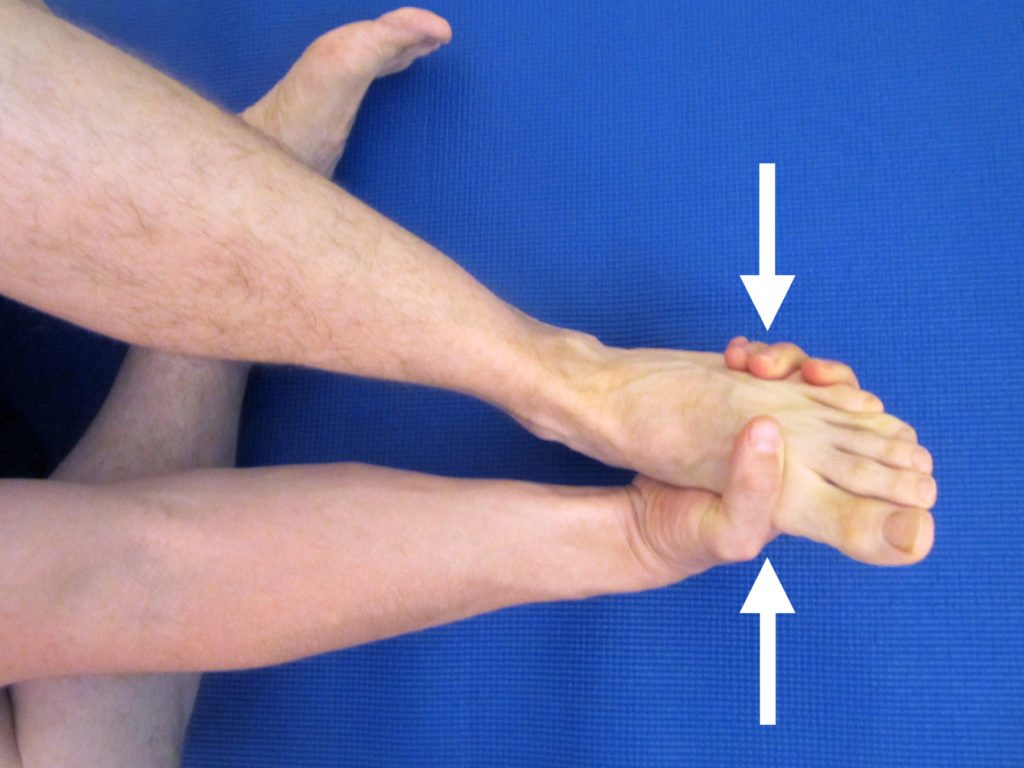
The nerve most often affected runs between the third and fourth toes, where the anatomy is narrowest.
The Classic Symptoms
●
The phantom pebble
It feels like a stone in your shoe or a sock bunched under the ball of your foot, but there is nothing actually in the shoe.
✹
Burning into the toes
Sharp, burning, or electric pain in the ball of the foot that radiates into the third and fourth toes.
≈
Numbness and tingling
Pins and needles or a “dead” feeling in the affected toes, a sign the nerve itself is involved.
✔
The shoe-removal test
Symptoms flare in snug shoes and heels, then ease within minutes when you take the shoe off and massage the foot. This pattern is characteristic of a neuroma.
Is It Really a Neuroma?
Ball-of-foot pain has several look-alikes, and telling them apart takes a careful exam. Here is how we do it:
| Feature | Morton’s Neuroma | Capsulitis | Stress Fracture |
|---|---|---|---|
| What it is | Thickened, pinched nerve | Inflamed joint capsule, usually the 2nd toe joint | Hairline crack in a metatarsal bone |
| Pain quality | Burning, electric, radiates into toes; numbness common | Aching directly under the joint, like walking on a bruise | Focused, worsens steadily with activity |
| Tell-tale sign | Relief when the shoe comes off; clicking feeling on exam | Feels swollen; toe may start drifting | Pinpoint bone tenderness; often follows a mileage jump |
| How we confirm | Exam plus in-office ultrasound | Exam plus X-ray/ultrasound | X-ray, sometimes follow-up imaging |
This is why we combine a hands-on exam with digital X-rays and diagnostic ultrasound in the office: the treatment for each of these is different, so getting the diagnosis right first saves you time.
You’ve Probably Already Tried…
Wider shoes. Cushioned insoles from the pharmacy. Rubbing your foot at your desk. Avoiding the heels or cleats that set it off. Maybe a metatarsal pad you positioned yourself, where placement matters a great deal: a met pad in the right spot spreads the bones and relieves the nerve, while the same pad half an inch off can make things worse.
Footwear changes and properly placed padding are genuinely the first line of treatment, and for early neuromas they often work. What they cannot do is shrink a nerve that has already thickened. If you have been managing symptoms for months and the pebble feeling keeps returning, it is worth having the nerve evaluated.
When to See a Specialist
Come in when the symptoms have lasted more than a few weeks despite roomier shoes; when numbness or tingling has joined the pain, since that signals real nerve irritation; when you are choosing activities around your foot; or when self-placed pads and insoles have not changed the pattern. Early neuromas often respond to simple measures. Established ones usually need a proper diagnosis and a step-by-step plan, and getting the diagnosis right is where we start.
One visit gets you an exam, imaging, and an answer. Ball-of-foot pain has four common causes, and knowing which one you have shapes the whole plan.
Same-Day Urgent Appointments Usually Available
Call either office or request an appointment online.
☎ Fredericksburg: (540) 371-3338
☎ North Stafford: (540) 659-5067
Treatment: The Ladder
Most neuromas are settled without an operating room. Here is the order we work in, and what each step is actually for.
Non-Surgical Care
Footwear and precision padding
A wide toe box removes the squeeze; a metatarsal pad placed by someone who does this daily spreads the bones and decompresses the nerve. A rocker-sole shoe can also take pressure off the ball of the foot and, for some patients, quiets the neuroma on its own.
Custom 3D orthotics
Fabricated from a 3D scan in our office with neuroma-specific modifications built in, so the offloading is engineered into every step you take rather than depending on a stick-on pad staying put.
Cortisone injection
An anti-inflammatory injection around the nerve can break the irritation cycle and provide months of relief, and it doubles as diagnostic confirmation: when the injection quiets the pain, we know we have the right target. This is our first-line injection for a neuroma.
Surgical Care
Neurectomy with nerve relocation
When a Morton’s neuroma has not responded to a fair trial of conservative care and a cortisone injection, the definitive treatment is removing the thickened segment of nerve. Rather than simply cutting the nerve and closing, Dr. Donato relocates the cut nerve ending into nearby muscle, where it can heal quietly. That extra step lowers the chance of the nerve regrowing into a painful “stump” later on, which is a common reason neuroma surgery does not hold. The trade-off we discuss up front: a small patch of permanent numbness between the affected toes, which most patients find a reasonable exchange for relief from burning pain.
Nerve decompression, for the right nerve
Not every nerve problem in the foot is a Morton’s neuroma. We also treat entrapments elsewhere, such as a pinched nerve on the top of the foot, where the goal is to free and preserve the nerve rather than remove it. Matching the procedure to the exact nerve and the exact problem is a large part of getting this right.
How we get there
We almost always start conservative: roomier shoes, a rocker-sole shoe when it helps, custom orthotics, and a cortisone injection to calm the nerve. When a genuine trial of that has failed, surgery becomes the reasonable next step, and we will have made sure it is the right one before scheduling anything.
What to Expect After Neuroma Surgery
1
Surgery day
An outpatient procedure through a small incision, usually on top of the foot. You go home the same day in a surgical shoe.
2
First three weeks
Walking short distances in the surgical shoe, with the foot elevated when resting. Discomfort is typically modest and front-loaded to the first several days.
3
Around week four
Transition back into a roomy sneaker as swelling permits, with walking distance building steadily.
4
Weeks four to eight
Return to most activities. The expected numbness between the toes settles in as normal, and for most patients the burning pebble pain does not return with it.
Why Patients Choose Rappahannock Foot & Ankle Specialists
Neuroma care rewards precision, and that is what this practice is built for: diagnostic ultrasound in the office so we can see the nerve, cortisone injections delivered with the accuracy that comes from doing this every day, and custom orthotics fabricated from a 3D scan of your foot. And when surgery is the right answer, our board-certified and board-eligible surgeons do more than remove the nerve. Dr. Donato relocates the cut nerve ending into muscle to lower the odds of painful regrowth. This practice has been caring for foot-nerve problems in the region since 1986.
Meet the Surgeons

Dr. Michael Donato

Dr. Sunshine Brady-Thomas

Dr. Joel Zarzuela

Dr. Martha Hurley

Dr. Neelum Patel

Dr. Jessica Somma

Dr. Stephen Carley
Emeritus
What Our Patients Say
Frequently Asked Questions
Is a Morton’s neuroma a tumor?
No. Despite the name, it is a thickened, irritated nerve, not a growth, and it poses no danger beyond the pain itself. The “-oma” in the name sounds far more alarming than the condition is.
Will it go away on its own?
Early, mildly irritated nerves sometimes settle with roomier shoes and rest. Established neuromas rarely do, because every step re-pinches the nerve and the thickening is self-reinforcing. The general rule with neuromas is that earlier treatment is simpler treatment.
Do the injections hurt?
There is a brief sting, softened by the numbing agent mixed into the injection, and most patients find it more comfortable than they expected. Relief from a cortisone injection can arrive within days.
How well do injections work? Will I still need surgery?
Many patients get lasting relief from conservative care and a cortisone injection and do not need surgery, especially when the nerve has not spent years thickening. When that relief does not hold, that in itself tells us surgery is genuinely indicated rather than premature.
What is recovery from neuroma surgery like?
Outpatient surgery, walking in a surgical shoe right away, back into a roomy sneaker around four weeks, and most activities by the four-to-eight-week mark. As foot surgeries go, it is one of the gentler recoveries.
Will my toes be numb after surgery?
If the nerve segment is removed, yes, a small patch of skin between the affected toes stays permanently numb. Most patients find that a reasonable trade for relief from the burning pain, and we make sure you understand it fully before anything is scheduled. Relocating the cut nerve end into muscle, which is how we perform the procedure, also lowers the chance of a painful nerve regrowth down the line.
Can I keep running while we treat this?
Usually yes, with footwear changes, orthotics, and sometimes temporary training modifications. Our goal is to treat the nerve without benching you, and our in-house physical therapy team helps manage the athletic side.
Does insurance cover neuroma treatment?
Yes, evaluation, imaging, injections, and surgery for a symptomatic neuroma are standard covered medical care under most plans. We verify your specific benefits before treatment begins.
Why do women get neuromas more often?
Decades of epidemiology point at footwear: narrow toe boxes and heels that load the ball of the foot compress exactly the anatomy where neuromas form. Foot structure you inherit matters too, which is why not every heel-wearer gets one and some sneaker-wearers do.
Ready to Take the Next Step?
Ready to Schedule?
Request an appointment online or call your nearest office below.
Have Questions First?
Call your nearest office and our team will happily answer.
Not Sure It’s a Neuroma?
Ball-of-foot pain has four common causes. One visit with an exam and in-office imaging sorts them out.
Our Locations
Fredericksburg
195 Falcon Drive
Fredericksburg, VA 22408
☎ (540) 371-3338
North Stafford
450 Garrisonville Road, Suite 115
Stafford, VA 22554
☎ (540) 659-5067